


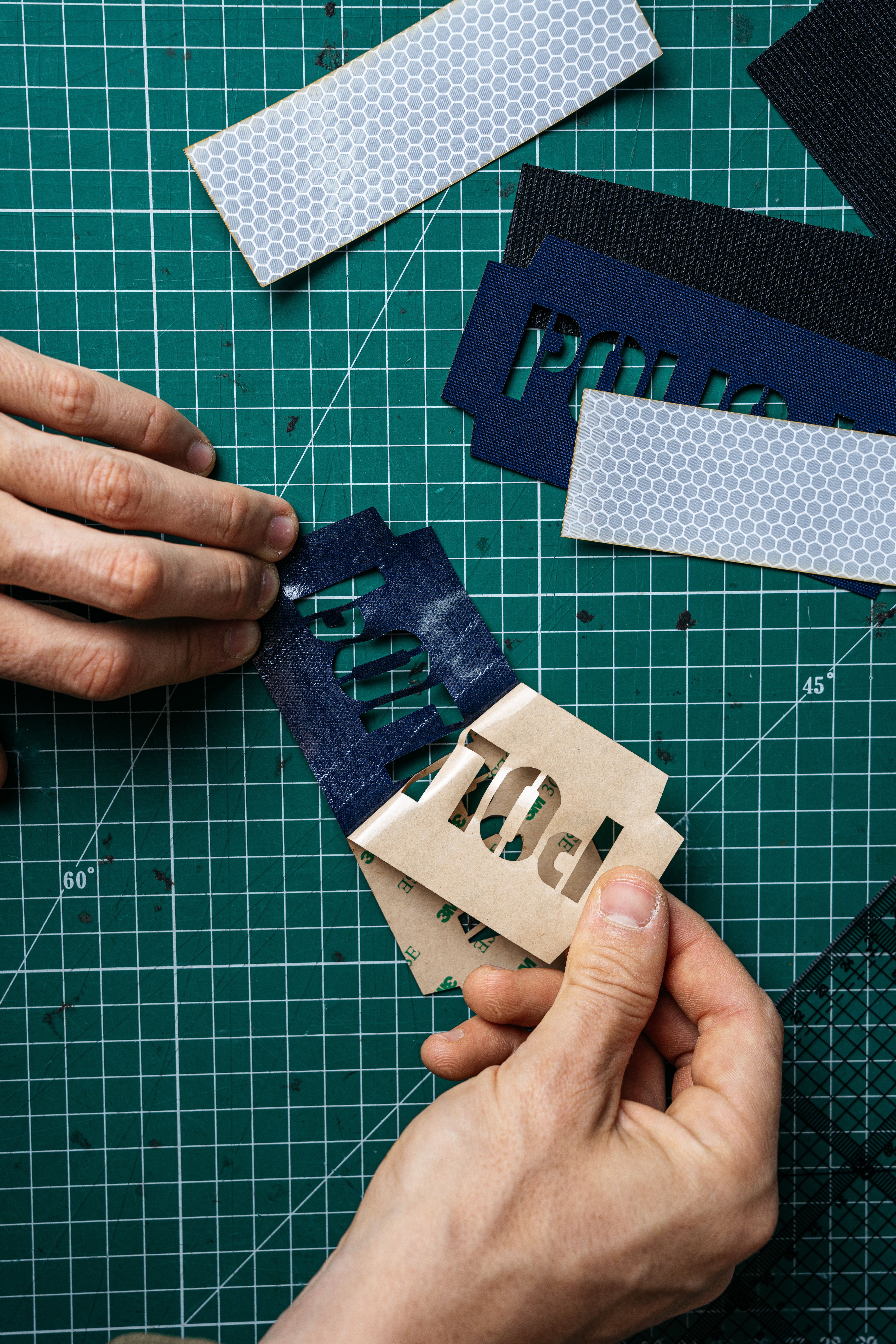
In this article, we take a closer look at how laser-cut patches are made. We explain the available materials and show how artwork should be prepared so that the finished patch remains legible, durable, and visually balanced. Patches may appear to be simple pieces of equipment, but producing a reliable product requires a well-prepared design, the right materials, and a carefully controlled manufacturing process.
GTW Gear offers both ready-made patches from our standard range and custom designs manufactured to order. Every production stage is handled in-house, allowing us to maintain consistent quality and adapt each project to the customer's requirements.
Laser-cut technology offers extensive design possibilities, but it also has physical limitations. Artwork that looks excellent on a computer screen may not translate directly into fabric. The real production process therefore begins long before the laser cutter is switched on.
How do we make our laser-cut patches?
Every patch starts with an idea. It may be a logo, unit insignia, illustration, name tape, blood-type marking, or even a simple sketch showing the intended result. Once we receive the artwork, it must be converted into a production-ready vector design and adapted to the laser-cut process.
At this stage, we assess the final dimensions, the level of detail, and the width of individual elements. A laser can cut with exceptional precision, but the working material is still fabric rather than a digital image. A feature measuring a fraction of a millimeter may be perfectly visible on screen yet prove too small, fragile, or indistinct when cut from Cordura®.
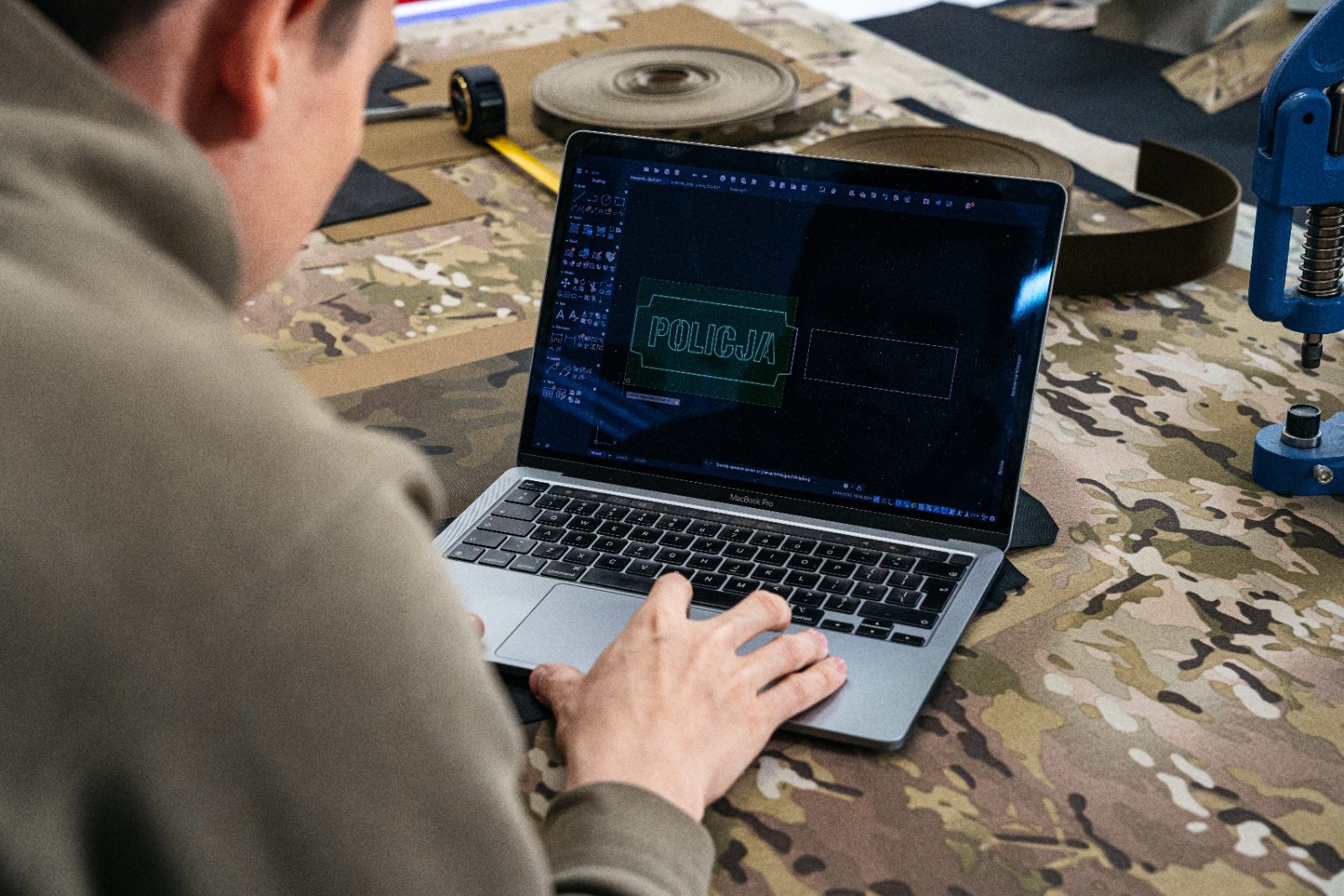
This is why some designs need to be simplified. We may increase line widths, reduce the number of small details, or modify their shape. The objective is not to reproduce the source file at any cost, but to create a patch that remains clear, robust, and visually convincing after manufacture. This is particularly important for compact patches, where every millimeter matters. Whenever substantial changes are required, we consult the customer and present the available options before production begins.
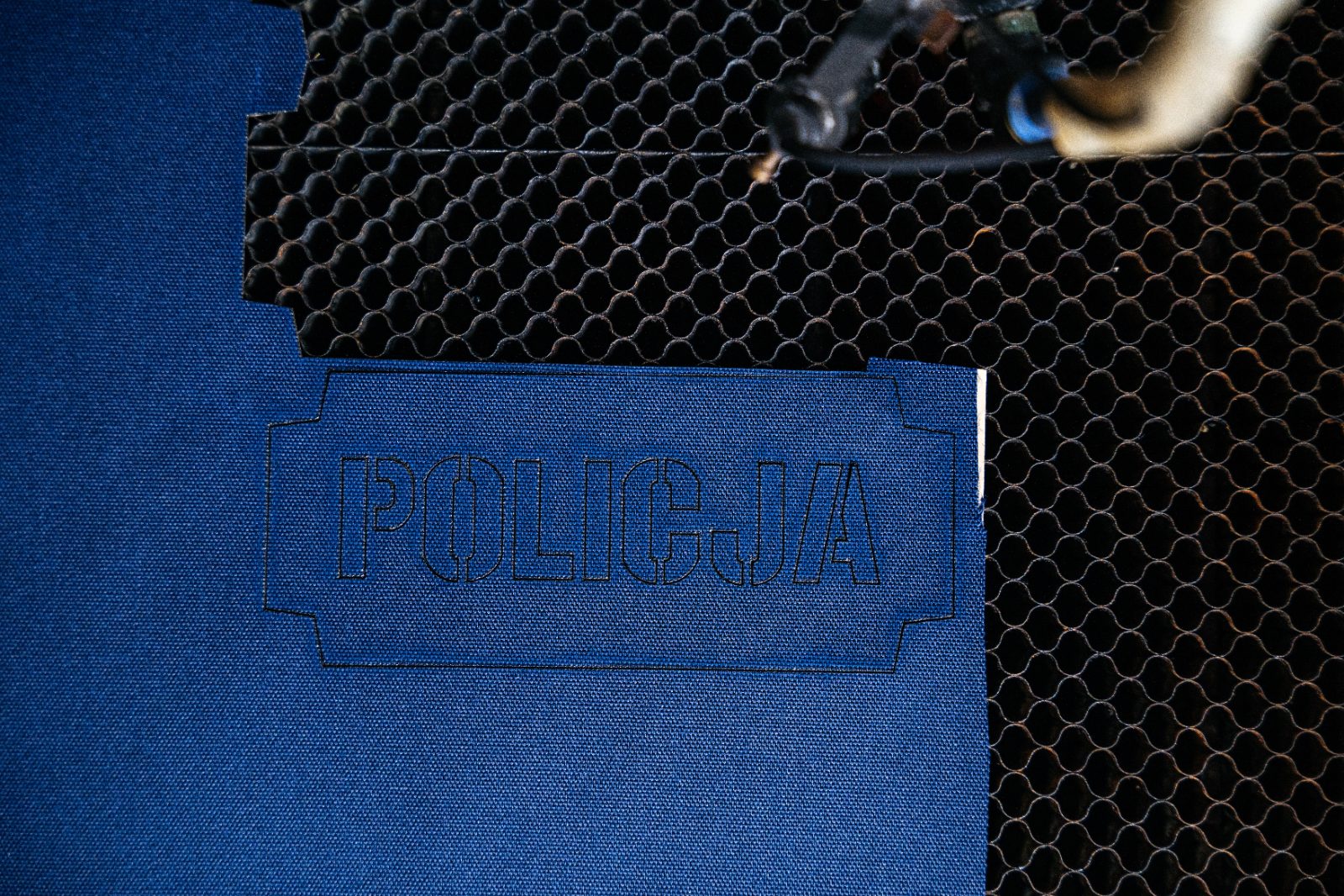
After the design is approved, the selected Cordura® fabric—with a heat-activated adhesive membrane applied to its reverse—is placed in the laser cutter. The machine cuts the prepared design, while the backing layer is cut separately to the final outline of the patch.
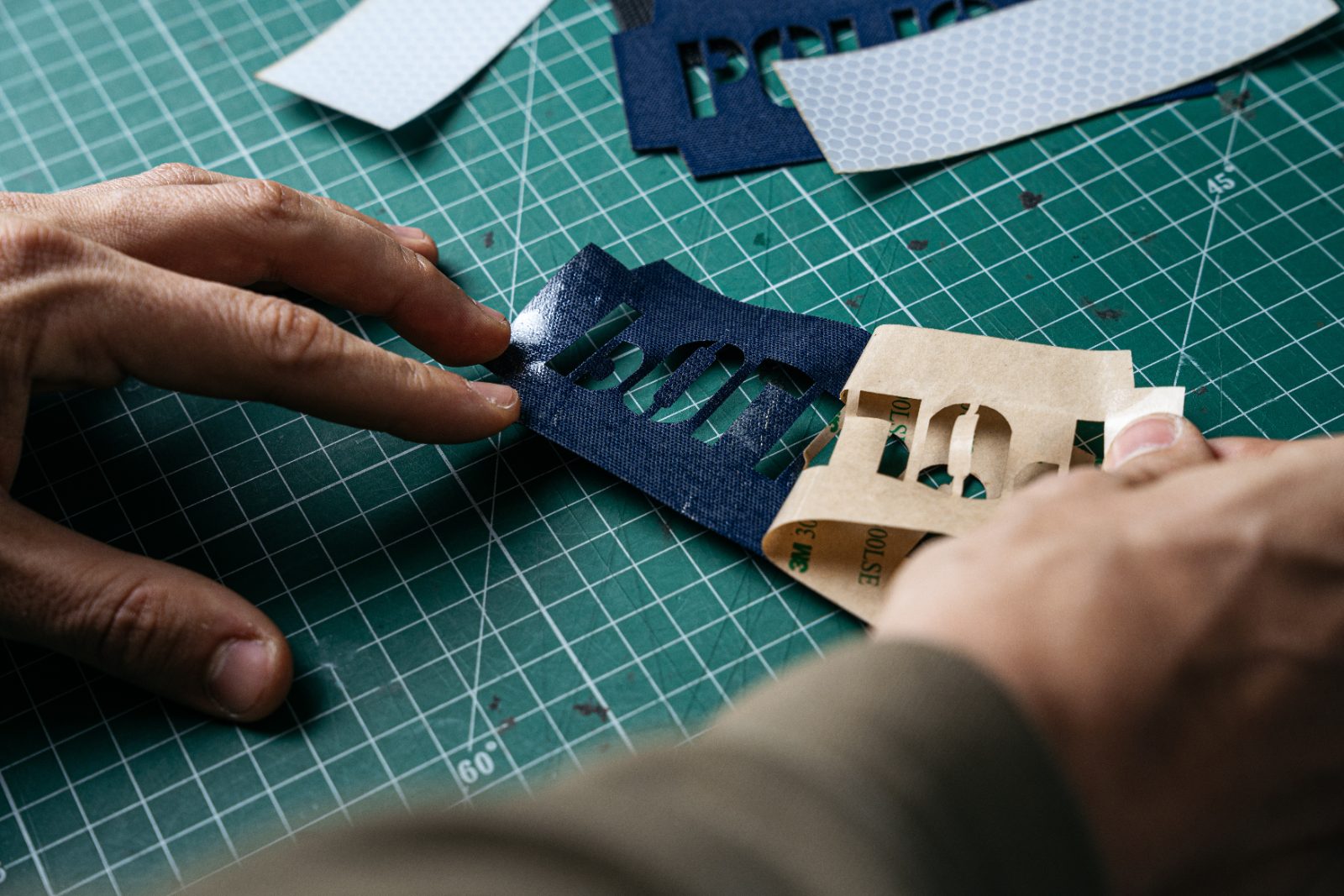
We then inspect the cut edges, the proportions of the design, and the finished dimensions. The Cordura® layer is bonded to the prepared backing, and the fabric edges are folded inward. This is not merely a cosmetic detail: folded edges reduce fraying and significantly improve durability. Tactical patches are routinely exposed to abrasion, moisture, dirt, and intensive field use, so they must retain their structure long after leaving the workshop.
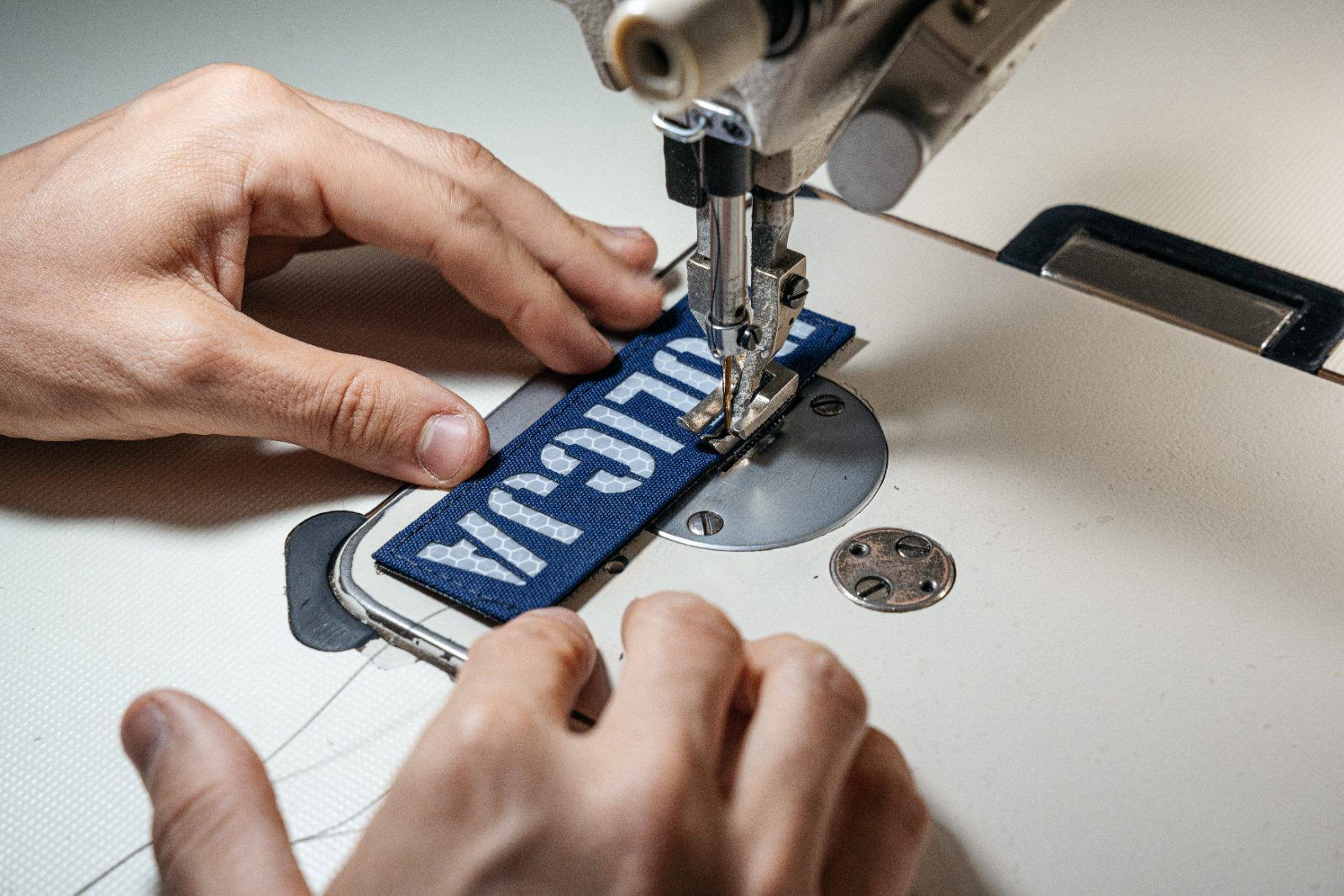
The final manufacturing stage is machine stitching. The seam stabilizes the construction, secures the individual layers, and provides a clean, professional finish. After final quality control, the patch is ready for the customer.
Ten Cordura® colors and six backing options
One of the key advantages of laser-cut patches is the wide range of possible color combinations. Our standard offer currently includes ten base-fabric colors and six principal backing variants.
Reflective films are available in white, blue, red, and yellow. They are especially useful when a patch must provide both identification and enhanced visibility. We also offer a matte black, non-reflective film that delivers strong contrast and a highly legible design without additional reflective properties.
Our most specialized option is IR film. In normal light, it resembles ordinary black backing. Through night-vision equipment, however, it behaves in a manner similar to reflective material. This makes it suitable for identification markings intended for nighttime operations. IR film is more expensive than conventional backing because the material we use is manufactured in the United States.
The standard range covers most orders, but we are not limited to materials shown in the product configurator. We also hold selected non-standard fabrics left from specialist projects, and we can manufacture patches from customer-supplied material. If you require a particular camouflage pattern or an uncommon color, contact us. We will check our current inventory or assess whether sourcing the material is practical for a larger production run.
Standard patch or custom design?
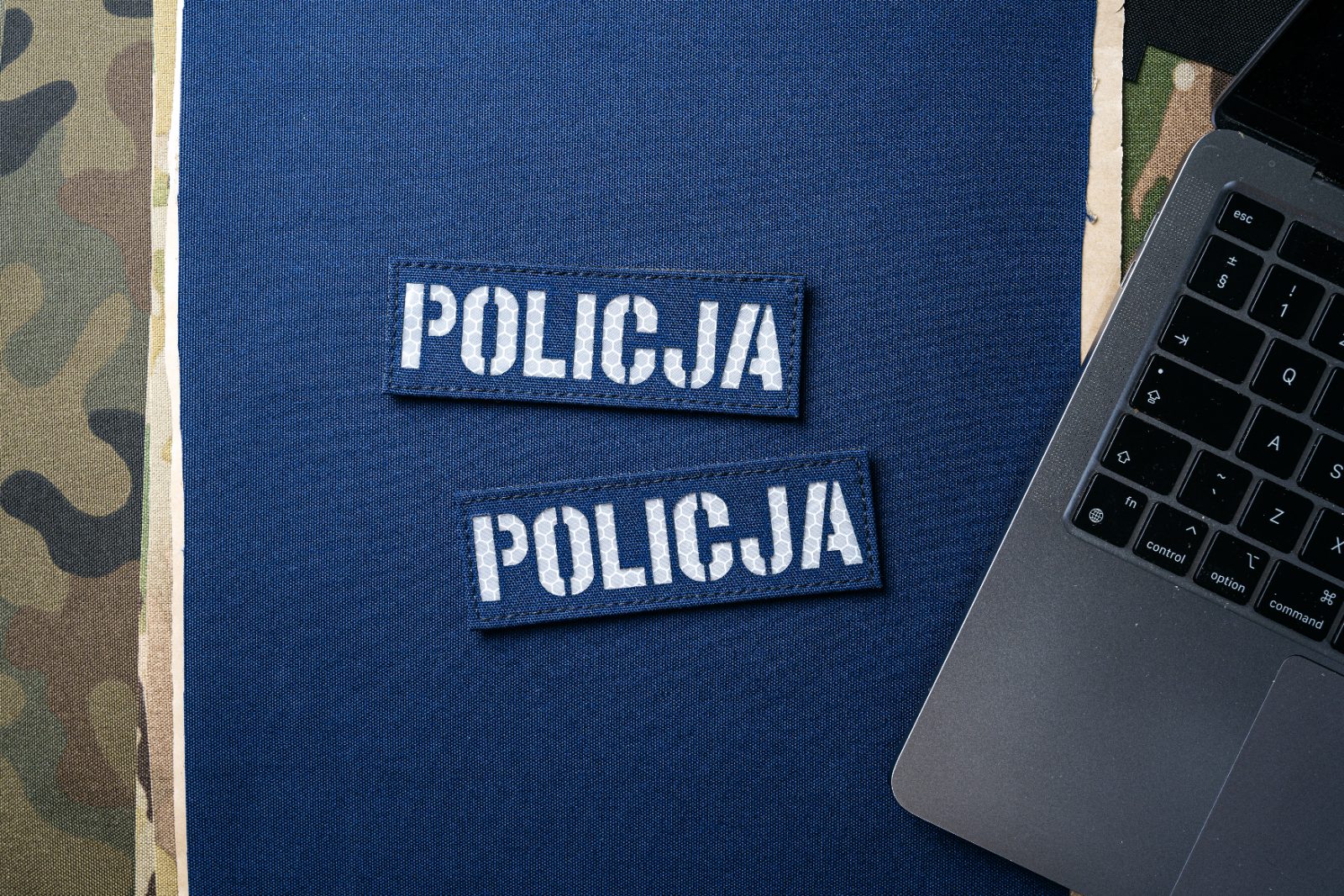
Our range includes two main types of patches: standard designs and custom-made projects. Standard patches are less expensive and faster to manufacture because their artwork has already been prepared, tested, and optimized. We know that each design will retain the correct proportions, sharpness, and readability after cutting.
Custom patches provide far greater flexibility. This is where laser cutting shows its greatest advantage: the ability to create identification tailored precisely to the user. GTW Gear has completed hundreds of individual projects, ranging from name tapes and blood-type markers to formation emblems, rank insignia, team logos, shooting club patches, and entirely original artwork.
How should artwork for a laser-cut patch be prepared?
The first consideration is the amount of detail. A large patch can reproduce relatively small features, while the same artwork reduced to a compact format may become impossible to manufacture. Complex coats of arms, logos, and emblems therefore often need careful simplification.
The second issue is color. A classic laser-cut patch is essentially a two-color construction: the color of the Cordura® top layer and the color of the selected backing. It is not a full-color print or multicolor embroidery. Artwork containing five, six, or ten colors cannot be transferred directly and must be reduced to two contrasting surfaces.
The structure of the design is equally important. All elements remaining in the upper Cordura® layer must be connected. Letters with enclosed counters are a useful example: without correctly designed bridges, the center section would simply fall out after cutting. These connecting cuts must be wide enough to provide strength, yet discreet enough not to disturb the visual appearance.
We increasingly receive artwork created with AI tools. Such tools can be useful for developing ideas, but they do not account for manufacturing constraints. AI-generated designs frequently contain excessive micro-detail, disconnected elements, gradients, shading, and numerous colors. They may look impressive on screen, but they usually cannot be transferred directly into a two-layer Cordura® and film construction.
If you are unsure whether your design is suitable for laser cutting, send it to us. We will assess it free of charge and explain what should be changed to make production possible.
What determines the price of a custom patch?
The cost of the finished patch and the cost of preparing the design are separate factors. With complex artwork, file preparation can represent the largest part of the work. The graphic must be analyzed, simplified, connected correctly, adjusted for minimum line widths, converted for cutting, and sometimes tested through one or two prototypes.
For a single custom patch, all of that preparation time is assigned to one item, which is why one-off designs cost more than ready-made models. The situation changes significantly with larger production runs: the design is prepared once and then used to manufacture the required number of identical patches. The setup cost is distributed across the entire order, which can reduce the unit price by 40–60% compared with ordering a single patch.
This is particularly advantageous for military and law-enforcement units, shooting clubs and teams, and other organizations requiring multiple identical identifiers. For larger quantities, contact us directly and we will prepare an individual quotation based on the design, materials, and order volume.
 Log in with Google