


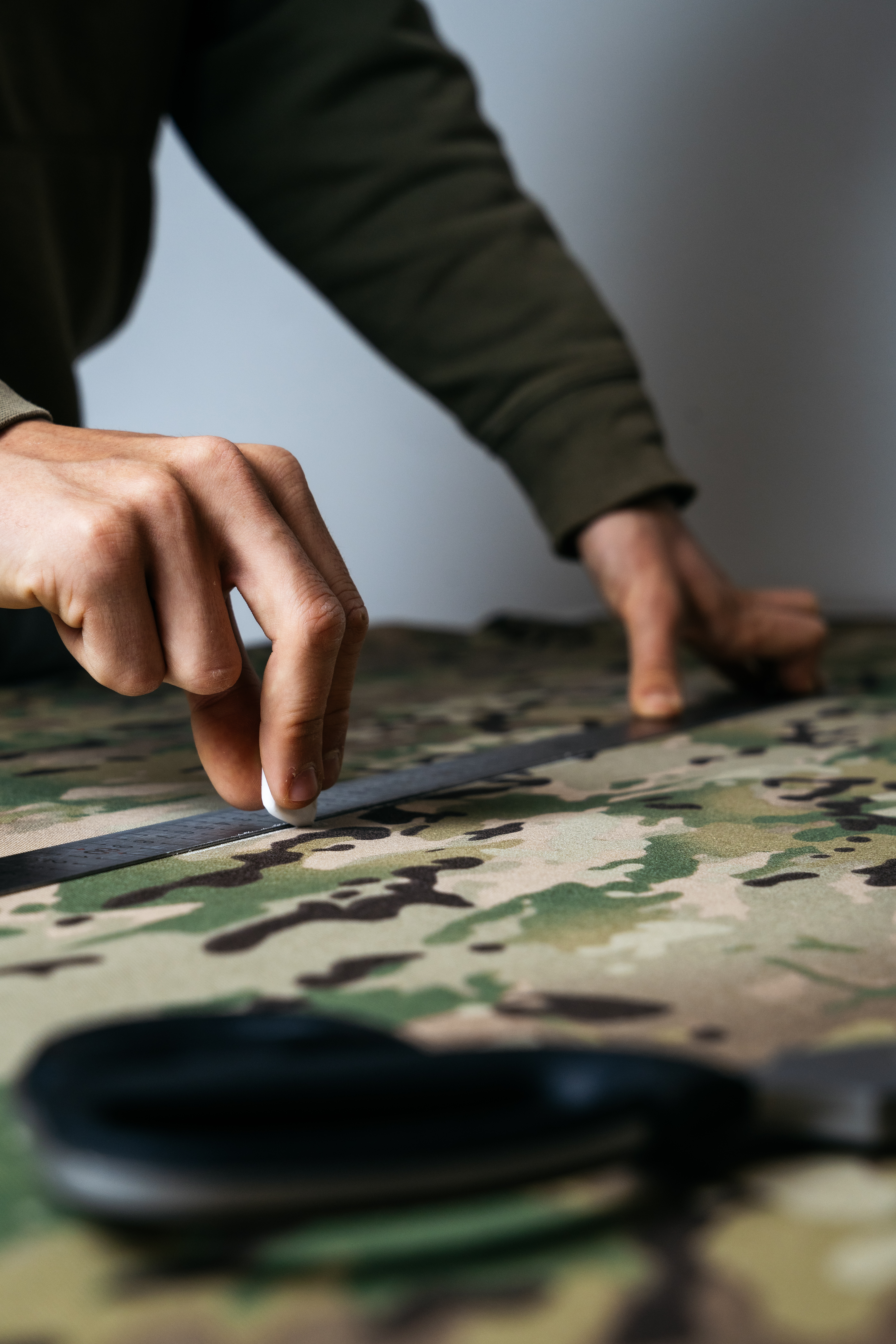
At GTW Gear, we have always believed that an outstanding, thoroughly refined product begins long before anyone sits down at a sewing machine or prepares a cutting pattern. Quality starts with the deliberate selection of materials, components, and manufacturing technologies. In the tactical equipment industry, there is no room for arbitrary choices or compromises driven solely by price.
Every item—whether it is a simple cargo pouch, an IFAK, a tactical belt, or an organizer—must be treated as a complete system. The fabric, webbing, buckles, thread, hook-and-loop, and construction methods all need to work together in terms of strength, function, and appearance.
We do not select suppliers according to short-lived trends. We rely on manufacturers and solutions that have demonstrated their value through years of demanding professional use. At the same time, consistent availability matters: a premium material is only practical if we can maintain production continuity and deliver repeatable quality from one production run to the next.
As a Polish company, we support domestic manufacturers whenever their products meet our requirements. Where the best solution is made abroad, we source proven American and European components. The final quality of the finished gear remains the deciding factor.
500D Cordura®—the foundation of our equipment
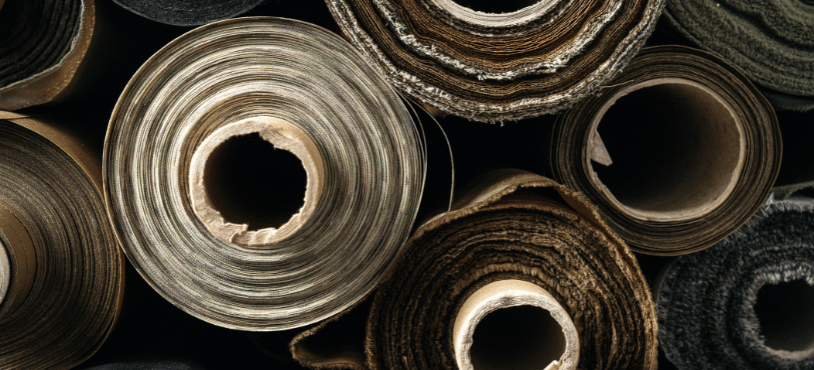
The principal fabric used in our production is genuine 500D Cordura®. It is one of the most versatile materials used in modern tactical load-bearing equipment and has become an industry standard among professional manufacturers for good reason. It provides excellent resistance to abrasion, tearing, and mechanical damage.
We choose the 500-denier construction because it provides an excellent balance of weight, stiffness, and durability. Heavier materials such as 770D or 1000D Cordura® are bulkier and more rigid. In modern equipment designed for comfort during long operations, that extra weight is often unnecessary. Every additional gram contributes to fatigue and may ultimately affect the user's efficiency.
We use original Cordura® supplied through reputable sources—not inexpensive imitation fabrics commonly sold under similar names. Many substitutes look comparable when new, but the difference quickly becomes visible in mechanical strength, coating quality, colorfastness, and long-term wear.
Cordura® laminates and laser-cut construction
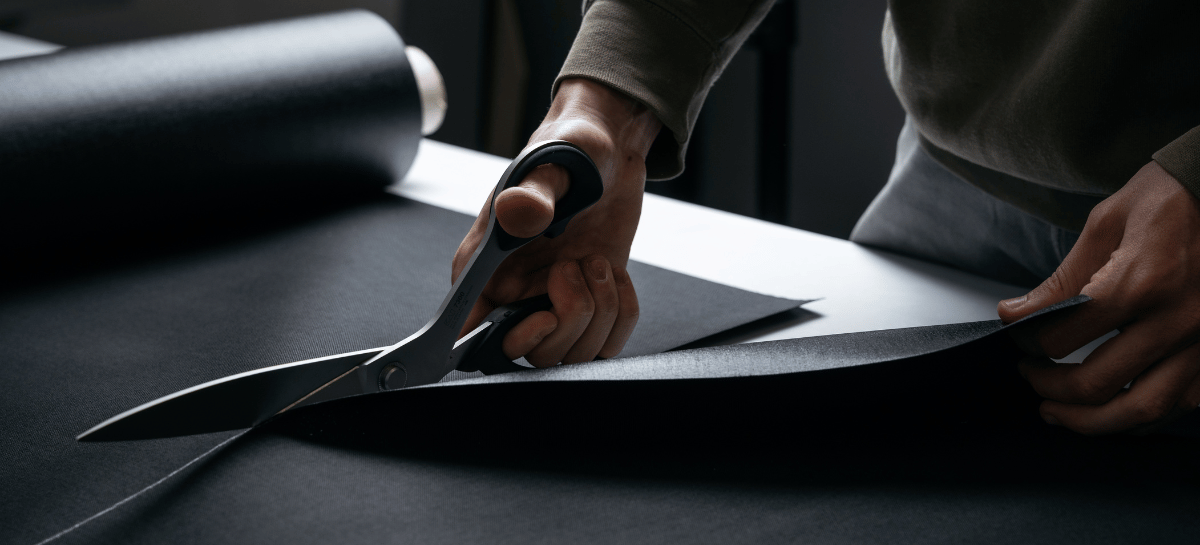
GTW Gear has used laminated fabrics extensively from the beginning. Laminates reduce weight and profile while enabling structural solutions that cannot be achieved through conventional sewing alone. They also improve camouflage continuity because laser-cut elements can be produced without contrasting edge tape or excessive seams.
A laminate consists of two bonded layers of Cordura® or other technical fabrics. We purchase proven standard laminates and commission selected variants to our specification, allowing us to control stiffness and other technical properties.
Crucially, our primary laminates use genuine Cordura® on both sides. We do not reduce costs by bonding a premium outer face to an inexpensive imitation inner layer. Such materials may look acceptable in photographs but often reveal their weaknesses quickly through fraying, pilling, reduced mechanical resistance, or delamination. A full-grade Cordura® laminate costs more, but offers significantly better service life, structure, and appearance.
2M and Duraflex buckles and hardware
Plastic hardware is frequently underestimated, even though it often performs a mission-critical function. A broken buckle or adjuster can render an otherwise intact piece of equipment unusable in the field. Quick-release buckles on plate-carrier cummerbunds are a clear example.
We do not restrict ourselves to a single manufacturer. Different buckle and adjuster designs perform better in different applications, so each component is selected according to practical requirements. Our primary suppliers are 2M and Duraflex—globally recognized brands offering precise, repeatable manufacturing and excellent resistance to impact and cracking, including at low temperatures.
Color matching matters as well. A MultiCam® product should not be fitted with black hardware merely because it is cheaper or easier to obtain. We order many components in colors selected for specific fabric and camouflage variants. This approach is more demanding logistically, but professional equipment should be coherent in every detail.
Coats Nylbond thread
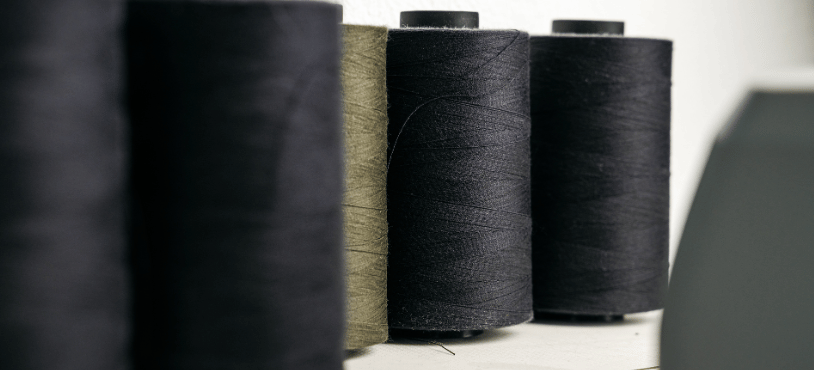
Even the best design will fail if it is sewn with unsuitable thread. Thread quality affects both structural durability and the visual quality of the stitching. We use Coats Nylbond, a premium bonded polyamide thread developed for applications requiring high mechanical strength.
Nylbond provides an excellent balance between tensile strength and sewability. It runs reliably through the machine and produces clean results in both bartacks and conventional lockstitch seams. It is available in a broad color range and offers very good resistance to UV radiation and weather exposure, retaining both color and performance during extended outdoor use.
Load-bearing webbing from Pasamon, Murdock, and MMI
Webbing is among the hardest-working components in tactical equipment. It carries loads, interfaces with buckles, and is continually exposed to abrasion and weather. We primarily use polyamide webbing from the Polish manufacturer Pasamon and US manufacturers Murdock and MMI.
The supplier depends on the color or camouflage pattern. Pasamon webbing is used for solid colors such as Black, Ranger Green, and Coyote Brown. Murdock webbing is used for original MultiCam®, while selected MMI webbing appears in MultiCam Tropic, MultiCam Black, and M81 Woodland products.
Murdock camouflage patterns are woven directly into the webbing rather than printed onto the surface. Woven patterns retain their color for longer, resist characteristic surface wear, and perform better under heavy use. They are considerably harder to source than printed alternatives, which is why webbing types vary between camouflage options.
We intentionally choose polyamide instead of cheaper polyester webbing. Polyamide provides greater abrasion resistance and generally interfaces more effectively with high-quality plastic hardware.
YKK zippers—the global benchmark
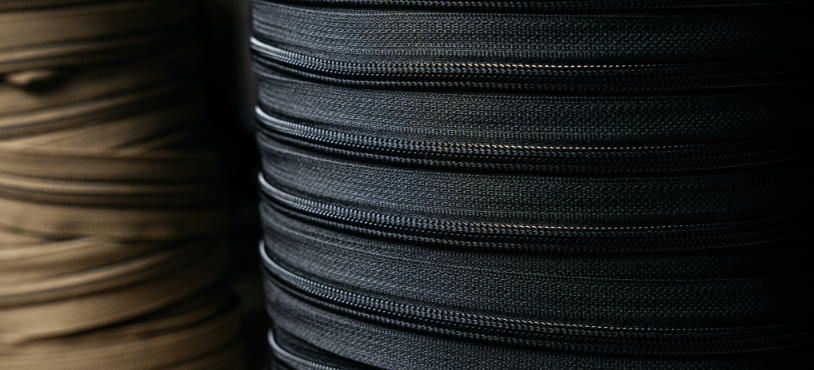
For zippers, our choice is straightforward: YKK. A zipper is exposed to frequent movement, dirt, and uneven loading, and its failure can disable an entire pouch or pack at the worst possible moment. Cheap alternatives may appear adequate at first, but often begin separating or jamming after extended use.
YKK delivers reliable operation, repeatable quality, and excellent longevity. Since GTW Gear began operating, we have not received a single warranty claim caused by zipper failure. On selected products, we also use MultiCam® zipper tape produced by the American manufacturer MMI. It is used in visually exposed areas such as front pockets and primary external closures.
Alfatex and MMI hook-and-loop
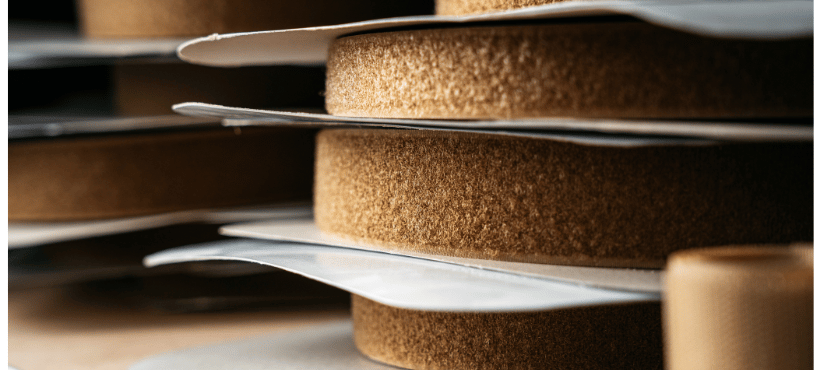
Hook-and-loop has a direct impact on the usability of tactical gear. Low-quality material quickly loses engagement strength, pills, and eventually restricts the function of the product. Visible loop panels also occupy a substantial area on many pouches, organizers, and medical kits, making accurate color and camouflage matching important.
We primarily use Alfatex hook-and-loop, part of the Velcro Companies group. For camouflage variants, we use solutions from MMI. We also incorporate specialist constructions such as velour loop and double-sided hook-and-loop where they improve the product—for example, inside selected IFAKs.
Details that are easy to overlook
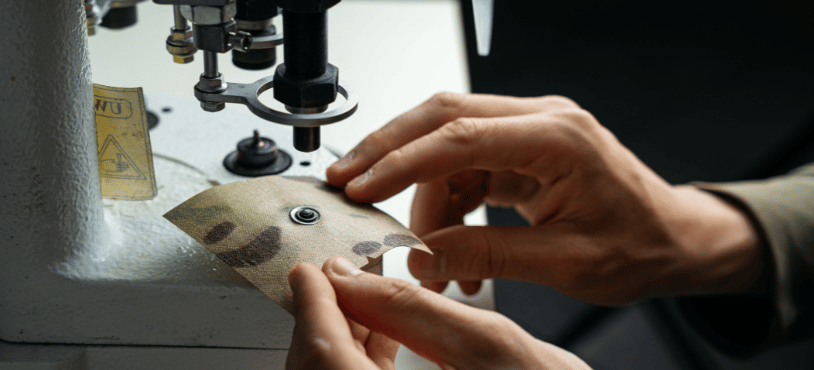
We pay close attention to color consistency across the complete product. Selected mesh fabrics and plastic components are dyed or ordered according to our specifications instead of being chosen from whatever happens to be available. We even match metal eyelets and other small pieces of hardware to particular color variants.
Some users may consider this a minor concern, but premium equipment is built from precisely these details. Customers investing in professional-grade tactical gear have every right to expect refinement in areas that many manufacturers overlook.
Materials are only part of the equation
Premium components alone cannot guarantee a premium product. They must be used correctly. This is why we give equal attention to product engineering, manufacturing technology, machine setup, needle selection, cutting processes, operator experience, and quality control.
Good materials make equipment more durable and predictable under demanding conditions. Properly selected components improve reliability, but the final result comes from treating the process as a complete system: sound design, proven materials, and the correct manufacturing technology.
In the next article in this series, we will take a closer look at the machinery and production technologies used in the GTW Gear workshop.
 Log in with Google